|
|
 |
|
Ancient & Modern Philosophical Perspectives

"Wisdom is the greatest form of happiness" Sophocles
Universal Wisdom
The word Religion, by Latin derivation, means something which binds. And Religion
is essentially that something which binds together the hearts of all men, without distinction of race, creed, caste, colour,
or sex; binds them all to each other with the golden thread of Universal Brotherhood; binds them to the heart of that Universal
God who is the very Principle of Life, of Consciousness, of Being, in every thing and all things. It is that which binds the
hearts of men to all ideals; which makes them believe in the now non-existent future;
which compels them to work for the good of distant generations yet unborn, for the helping of the inhabitants of far countries never visited, for the realization of aims in a far-off age and place not at all
visible to the fleshly eye of the present worker. It is that which makes the unbeliever by profession an unconscious believer
by action, despite himself and despite all logic and consistency. All effort, all aspiration, for the distant, the future,
the unknown — be the striving political or industrial, social or scientific, artistic or philanthropic, or even personal
and selfish — is essentially religious. In all such striving, the element of the hope of success, of the faith in one's
possibilities, of the belief in the continuance of the present into the future — be that future an hour distant or a
million years — is the element of true Religion. It is the conscious or unconscious
recognition of the fact that the spirit of man extends beyond the present moment, extends from the past through the present
into the future, and that if it extends even a moment before and a moment after, then and therefore, for the same reason,
whatever it be, it necessarily extends immortally throughout the eternity of time and the infinity of space, and embraces
all things and beings, however much the bodies of men conflict and perish.
Sympathy, fellow-feeling, love, the sensing of common Self of all in
all — which is the one bond that binds and holds together individuals, families,
tribes, nations, races, even as hate is the one sharp-edged instrument that sunders and scatters them apart — this love
of all living things is of the very essence of Religion. Such Universal Love is the first and the last manifestation of God,
the Universal and Immortal Self. It is this which triumphs eternally over Death and Hate and Evil. All association, all co-operation
of any kind, within whatsoever limits, is the product of this Fellow-feeling, this Common-feeling, this One-feeling.
Therefore are these sentiments far more
necessary to attend to than the so-called substantial things of life, even as the invisible air is more necessary to the living
organism than solid food. They reign at the birth of life and at its decay and death also. They all, in their growing gradation
of familism, parochialism, tribalism, provincialism, patriotism, nationalism, are but the manifestations of the feeling of
the Common Self in larger and larger circles. And they are thus powerful in their operation, because they are all in
growing degree embodiments of the Unity of the Omnipotent Spirit. And in the conflicts of religions, that religion will thrive
most which best helps forward inclusiveness, and that religion must decay most which most fosters mutual separation and narrow-minded
sectarianism and exclusiveness.
Whatsoever
that Self identifies itself with, one interest or a thousand, one body or a thousand, whatsoever it makes mine by act
of imagination, that becomes near and dear; whatever it dissociates itself from, whatever it regards as other, as foreign, as strange, that becomes distant and disagreeable. Brothers born of the same father
and mother will slay each other for a trifle which may happen to come between and separate them. Utter strangers, from the
ends of the world, will meet and marry as man and woman and become all in all to each other. Are not both phases the veriest
tricks of the imagination, mine and thine, mine and not mine' ? Verily, as the scriptures declare, nothing
is dear except for the sake of the Self. And as the circumference of the individual self expands with growth of intellect
and imagination, so more and more things and beings are enclosed within it. The man begins with identification of himself
with (that is to say, love of) his own body, and goes on step by step to love of family, of townsfolk, of countrymen, of race,
of fellow-religionists. Each one of these indicates one step in the growth and evolution of the soul.
Psychologists are agreed that the individualized
consciousness has three aspects. Some call them intellect, feeling and volition. Some prefer the names thought, emotion and
conation. Others call them cognition, desire and action. Others, imagination, will and self-assertion. Others, wisdom, will
and activity. Others, wisdom, love and will, reversing the use of the words will and love, but meaning the same facts. Still
others use other words. But there is a fairly general agreement as to the essential three facts or aspects involved: named
in Samskrt jñanam, ichchhã and kriyã, by common consent of all seers. And as these are the aspects of Consciousness
in its individualized form, so in [Page 12] its Universal form it shows forth the same as Omniscience, Omnipotence and Omnipresence. Men,
as they show forth more of the one or the other of these aspects fall into one of three classes, men of thought, men of art,
and men of action. And every Religion, being an embodiment of the feeling of that Common Consciousness, shows forth these
three aspects also. It is true that, commonly, the word religion brings up the idea of a spiritual aspiration, a Godward emotion,
a divine desire, a superphysical art; whereas metaphysics or philosophy may be said to represent the knowledge-side of the
same, and concrete science the active industrial application; yet in its wider and fuller sense Religion comprehends all these.
In this sense, we may say that every religion tells its followers: (a) What to think (or believe); (5) What to desire (or
feel); (c) What to do. And Theosophy enables us to see that the essential teachings of every religion in respect of each of
these vital questions, are practically the same.
(a) Every religion includes within itself a
body of doctrine more or less definitely formulated, a mass of knowledge more or less precisely expounded, relating to the
whence, the whither, the how and the why of the visible and invisible worlds, and of the human and other life inhabiting these;
and this part is its answer to [Page 13] the question: " What to think of all this world-process". (b] Every religion again has, as an integral
part, a system of ethics or morality, which is its answer to the question: " What to feel or wish for or towards our fellow-creatures".
(c) And finally every religion has a more or less elaborate code of sacraments and a general social polity, which is its answer
to the question: "What to do to purify and elevate and make ever richer and more beautiful the individual as well as the aggregate
physical and spiritual life of human beings".
The synthesis of the Self is not yet perfect. The
member of any one race, the follower of any one creed, sees and feels himself in the members of that race only, in
the followers of that creed only. But a higher integration of these differentiated
units is possible. It is possible to see and feel the Self in all men, whatsoever their creed or colour. And if a common country,
a common language, a common script, a common colour of skin, a common idea, make such strong bonds, how much stronger the
bond that a Common Self, a Common Life, should make between man and man! When that is done, when the Uiversal Spirit
of all men is recognized and realized by all men, then will we have reached the stage of Humanism, the federation of all the
nations.
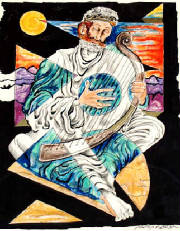
Bhagavan
Das, 1911
Educator
& Guest Speaker Robert Waxman
Robert Waxman offers classes, seminars and workshops about "comparative universal
truths" that are found in world religion and philosophy. He uses a unique and stimulating teaching approach to reveal
the timeless wisdom that is embedded in ancient and modern religions. He has written (3) books on universal
wisdom in esoteric philosophy.
Robert specializes in teaching his students about universal ethics, morals and virtues
that have been taught throughout the ages. He underlines these intuitive truths by explaining the wisdom teachings
of critically acclaimed scholars whose books have become classics over the past 3,000 years. Robert frequently refers
to the writings of Alan Watts, Joseph Campbell, Philo Judeaus, Aldous Huxley, Sir James Frazier, Descartes, Spinoza,
Maimonides, Bhagavan Das, Thomas Aquinas, Thomas Paine, Plotinus and Plato.
Robert was also the executive producer of the nationally released CD, Song
Universal, which is filled with mantras, chants and songs used for group meditation, birthing rooms and yoga
sessions.
|
|
 |
|
|
 |
|
|
 |
 |
 |
|
The Search For Universal Wisdom The Allegory of
the Cave by Plato
[Socrates] And now, I said, let me show in a figure how far our nature is enlightened
or unenlightened: --Behold! human beings living in a underground cave, which has a mouth open towards the light and reaching
all along the cave; here they have been from their childhood, and have their legs and necks chained so that they cannot move,
and can only see before them, being prevented by the chains from turning round their heads. Above and behind them a fire is
blazing at a distance, and between the fire and the prisoners there is a raised way; and you will see, if you look, a low
wall built along the way, like the screen which marionette players have in front of them, over which they show the puppets.
[Glaucon] I see. [Socrates] And do you see, I said, men passing along the wall carrying
all sorts of vessels, and statues and figures of animals made of wood and stone and various materials, which appear over the
wall? Some of them are talking, others silent. [Glaucon] You have shown me a strange image, and they are
strange prisoners. [Socrates] Like ourselves, I replied; and they see only their own shadows, or the
shadows of one another, which the fire throws on the opposite wall of the cave? [Glaucon] True, he said;
how could they see anything but the shadows if they were never allowed to move their heads? [Socrates]
And of the objects which are being carried in like manner they would only see the shadows? [Glaucon]
Yes, he said. [Socrates] And if they were able to converse with one another, would they not suppose that
they were naming what was actually before them? [Glaucon] Very true. [Socrates]
And suppose further that the prison had an echo which came from the other side, would they not be sure to fancy when one of
the passers-by spoke that the voice which they heard came from the passing shadow? [Glaucon] No question,
he replied. [Socrates] To them, I said, the truth would be literally nothing but the shadows of the images.
[Glaucon] That is certain. [Socrates] And now look again, and see what will naturally
follow if the prisoners are released and disabused of their error. At first, when any of them is liberated and compelled suddenly
to stand up and turn his neck round and walk and look towards the light, he will suffer sharp pains; the glare will distress
him, and he will be unable to see the realities of which in his former state he had seen the shadows; and then conceive some
one saying to him, that what he saw before was an illusion, but that now, when he is approaching nearer to being and his eye
is turned towards more real existence, he has a clearer vision, -what will be his reply? And you may further imagine that
his instructor is pointing to the objects as they pass and requiring him to name them, -will he not be perplexed? Will he
not fancy that the shadows which he formerly saw are truer than the objects which are now shown to him? [Glaucon]
Far truer. [Socrates] And if he is compelled to look straight at the light, will he not have a pain in
his eyes which will make him turn away to take and take in the objects of vision which he can see, and which he will conceive
to be in reality clearer than the things which are now being shown to him? [Glaucon] True, he now. [Socrates]
And suppose once more, that he is reluctantly dragged up a steep and rugged ascent, and held fast until he 's forced into
the presence of the sun himself, is he not likely to be pained and irritated? When he approaches the light his eyes will be
dazzled, and he will not be able to see anything at all of what are now called realities. [Glaucon] Not
all in a moment, he said. [Socrates] He will require to grow accustomed to the sight of the upper world.
And first he will see the shadows best, next the reflections of men and other objects in the water, and then the objects themselves;
then he will gaze upon the light of the moon and the stars and the spangled heaven; and he will see the sky and the stars
by night better than the sun or the light of the sun by day? [Glaucon] Certainly. [Socrates]
Last of he will be able to see the sun, and not mere reflections of him in the water, but he will see him in his own proper
place, and not in another; and he will contemplate him as he is. [Glaucon] Certainly. [Socrates]
He will then proceed to argue that this is he who gives the season and the years, and is the guardian of all that is in the
visible world, and in a certain way the cause of all things which he and his fellows have been accustomed to behold? [Glaucon]
Clearly, he said, he would first see the sun and then reason about him. [Socrates] And when he remembered
his old habitation, and the wisdom of the cave and his fellow-prisoners, do you not suppose that he would felicitate himself
on the change, and pity them? [Glaucon] Certainly, he would. [Socrates] And if they
were in the habit of conferring honors among themselves on those who were quickest to observe the passing shadows and to remark
which of them went before, and which followed after, and which were together; and who were therefore best able to draw conclusions
as to the future, do you think that he would care for such honors and glories, or envy the possessors of them? Would he not
say with Homer,
Better to be the poor servant of a poor master,
and to endure anything, rather than think as they do and live after their manner? [Glaucon]
Yes, he said, I think that he would rather suffer anything than entertain these false notions and live in this miserable manner.
[Socrates] Imagine once more, I said, such an one coming suddenly out of the sun to be replaced in his
old situation; would he not be certain to have his eyes full of darkness? [Glaucon] To be sure, he said.
[Socrates] And if there were a contest, and he had to compete in measuring the shadows with the prisoners
who had never moved out of the cave, while his sight was still weak, and before his eyes had become steady (and the time which
would be needed to acquire this new habit of sight might be very considerable) would he not be ridiculous? Men would say of
him that up he went and down he came without his eyes; and that it was better not even to think of ascending; and if any one
tried to loose another and lead him up to the light, let them only catch the offender, and they would put him to death. [Glaucon]
No question, he said. [Socrates] This entire allegory, I said, you may now append, dear Glaucon, to the
previous argument; the prison-house is the world of sight, the light of the fire is the sun, and you will not misapprehend
me if you interpret the journey upwards to be the ascent of the soul into the intellectual world according to my poor belief,
which, at your desire, I have expressed whether rightly or wrongly God knows. But, whether true or false, my opinion is that
in the world of knowledge the idea of good appears last of all, and is seen only with an effort; and, when seen, is also inferred
to be the universal author of all things beautiful and right, parent of light and of the lord of light in this visible world,
and the immediate source of reason and truth in the intellectual; and that this is the power upon which he who would act rationally,
either in public or private life must have his eye fixed. [Glaucon] I agree, he said, as far as I am able
to understand you. [Socrates] Moreover, I said, you must not wonder that those who attain to this beatific
vision are unwilling to descend to human affairs; for their souls are ever hastening into the upper world where they desire
to dwell; which desire of theirs is very natural, if our allegory may be trusted. [Glaucon] Yes, very
natural. [Socrates] And is there anything surprising in one who passes from divine contemplations to
the evil state of man, misbehaving himself in a ridiculous manner; if, while his eyes are blinking and before he has become
accustomed to the surrounding darkness, he is compelled to fight in courts of law, or in other places, about the images or
the shadows of images of justice, and is endeavoring to meet the conceptions of those who have never yet seen absolute justice?
[Glaucon] Anything but surprising, he replied. [Socrates] Any one who has common
sense will remember that the bewilderments of the eyes are of two kinds, and arise from two causes, either from coming out
of the light or from going into the light, which is true of the mind's eye, quite as much as of the bodily eye; and he who
remembers this when he sees any one whose vision is perplexed and weak, will not be too ready to laugh; he will first ask
whether that soul of man has come out of the brighter light, and is unable to see because unaccustomed to the dark, or having
turned from darkness to the day is dazzled by excess of light. And he will count the one happy in his condition and state
of being, and he will pity the other; or, if he have a mind to laugh at the soul which comes from below into the light, there
will be more reason in this than in the laugh which greets him who returns from above out of the light into the cave. [Glaucon]
That, he said, is a very just distinction. [Socrates] But then, if I am right, certain professors of
education must be wrong when they say that they can put a knowledge into the soul which was not there before, like sight into
blind eyes. [Glaucon] They undoubtedly say this, he replied. [Socrates] Whereas,
our argument shows that the power and capacity of learning exists in the soul already; and that just as the eye was unable
to turn from darkness to light without the whole body, so too the instrument of knowledge can only by the movement of the
whole soul be turned from the world of becoming into that of being, and learn by degrees to endure the sight of being, and
of the brightest and best of being, or in other words, of the good. [Glaucon] Very true. [Socrates]
And must there not be some art which will effect conversion in the easiest and quickest manner; not implanting the faculty
of sight, for that exists already, but has been turned in the wrong direction, and is looking away from the truth? [Glaucon]
Yes, he said, such an art may be presumed. [Socrates] And whereas the other so-called virtues of the
soul seem to be akin to bodily qualities, for even when they are not originally innate they can be implanted later by habit
and exercise, the of wisdom more than anything else contains a divine element which always remains, and by this conversion
is rendered useful and profitable; or, on the other hand, hurtful and useless. Did you never observe the narrow intelligence
flashing from the keen eye of a clever rogue --how eager he is, how clearly his paltry soul sees the way to his end; he is
the reverse of blind, but his keen eyesight is forced into the service of evil, and he is mischievous in proportion to his
cleverness. [Glaucon] Very true, he said. [Socrates] But what if there had been
a circumcision of such natures in the days of their youth; and they had been severed from those sensual pleasures, such as
eating and drinking, which, like leaden weights, were attached to them at their birth, and which drag them down and turn the
vision of their souls upon the things that are below --if, I say, they had been released from these impediments and turned
in the opposite direction, the very same faculty in them would have seen the truth as keenly as they see what their eyes are
turned to now. [Glaucon] Very likely. [Socrates] Yes, I said; and there is another
thing which is likely. or rather a necessary inference from what has preceded, that neither the uneducated and uninformed
of the truth, nor yet those who never make an end of their education, will be able ministers of State; not the former, because
they have no single aim of duty which is the rule of all their actions, private as well as public; nor the latter, because
they will not act at all except upon compulsion, fancying that they are already dwelling apart in the islands of the blest.
[Glaucon] Very true, he replied. [Socrates] Then, I said, the business of us who
are the founders of the State will be to compel the best minds to attain that knowledge which we have already shown to be
the greatest of all-they must continue to ascend until they arrive at the good; but when they have ascended and seen enough
we must not allow them to do as they do now. [Glaucon] What do you mean? [Socrates]
I mean that they remain in the upper world: but this must not be allowed; they must be made to descend again among the prisoners
in the cave, and partake of their labors and honors, whether they are worth having or not. [Glaucon]
But is not this unjust? he said; ought we to give them a worse life, when they might have a better? [Socrates]
You have again forgotten, my friend, I said, the intention of the legislator, who did not aim at making any one class in the
State happy above the rest; the happiness was to be in the whole State, and he held the citizens together by persuasion and
necessity, making them benefactors of the State, and therefore benefactors of one another; to this end he created them, not
to please themselves, but to be his instruments in binding up the State. [Glaucon] True, he said, I had
forgotten. [Socrates] Observe, Glaucon, that there will be no injustice in compelling our philosophers
to have a care and providence of others; we shall explain to them that in other States, men of their class are not obliged
to share in the toils of politics: and this is reasonable, for they grow up at their own sweet will, and the government would
rather not have them. Being self-taught, they cannot be expected to show any gratitude for a culture which they have never
received. But we have brought you into the world to be rulers of the hive, kings of yourselves and of the other citizens,
and have educated you far better and more perfectly than they have been educated, and you are better able to share in the
double duty. Wherefore each of you, when his turn comes, must go down to the general underground abode, and get the habit
of seeing in the dark. When you have acquired the habit, you will see ten thousand times better than the inhabitants of the
cave, and you will know what the several images are, and what they represent, because you have seen the beautiful and just
and good in their truth. And thus our State which is also yours will be a reality, and not a dream only, and will be administered
in a spirit unlike that of other States, in which men fight with one another about shadows only and are distracted in the
struggle for power, which in their eyes is a great good. Whereas the truth is that the State in which the rulers are most
reluctant to govern is always the best and most quietly governed, and the State in which they are most eager, the worst. [Glaucon]
Quite true, he replied. [Socrates] And will our pupils, when they hear this, refuse to take their turn
at the toils of State, when they are allowed to spend the greater part of their time with one another in the heavenly light?
[Glaucon] Impossible, he answered; for they are just men, and the commands which we impose upon them
are just; there can be no doubt that every one of them will take office as a stern necessity, and not after the fashion of
our present rulers of State. [Socrates] Yes, my friend, I said; and there lies the point. You must contrive
for your future rulers another and a better life than that of a ruler, and then you may have a well-ordered State; for only
in the State which offers this, will they rule who are truly rich, not in silver and gold, but in virtue and wisdom, which
are the true blessings of life. Whereas if they go to the administration of public affairs, poor and hungering after the'
own private advantage, thinking that hence they are to snatch the chief good, order there can never be; for they will be fighting
about office, and the civil and domestic broils which thus arise will be the ruin of the rulers themselves and of the whole
State. [Glaucon] Most true, he replied. [Socrates] And the only life which looks
down upon the life of political ambition is that of true philosophy. Do you know of any other? [Glaucon]
Indeed, I do not, he said. [Socrates] And those who govern ought not to be lovers of the task? For, if
they are, there will be rival lovers, and they will fight. [Glaucon] No question. [Socrates]
Who then are those whom we shall compel to be guardians? Surely they will be the men who are wisest about affairs of State,
and by whom the State is best administered, and who at the same time have other honors and another and a better life than
that of politics? [Glaucon] They are the men, and I will choose them, he replied. [Socrates]
And now shall we consider in what way such guardians will be produced, and how they are to be brought from darkness to light,
-- as some are said to have ascended from the world below to the gods? [Glaucon] By all means, he replied.
[Socrates] The process, I said, is not the turning over of an oyster-shell, but the turning round of
a soul passing from a day which is little better than night to the true day of being, that is, the ascent from below, which
we affirm to be true philosophy? [Glaucon] Quite so.
|
|
|